
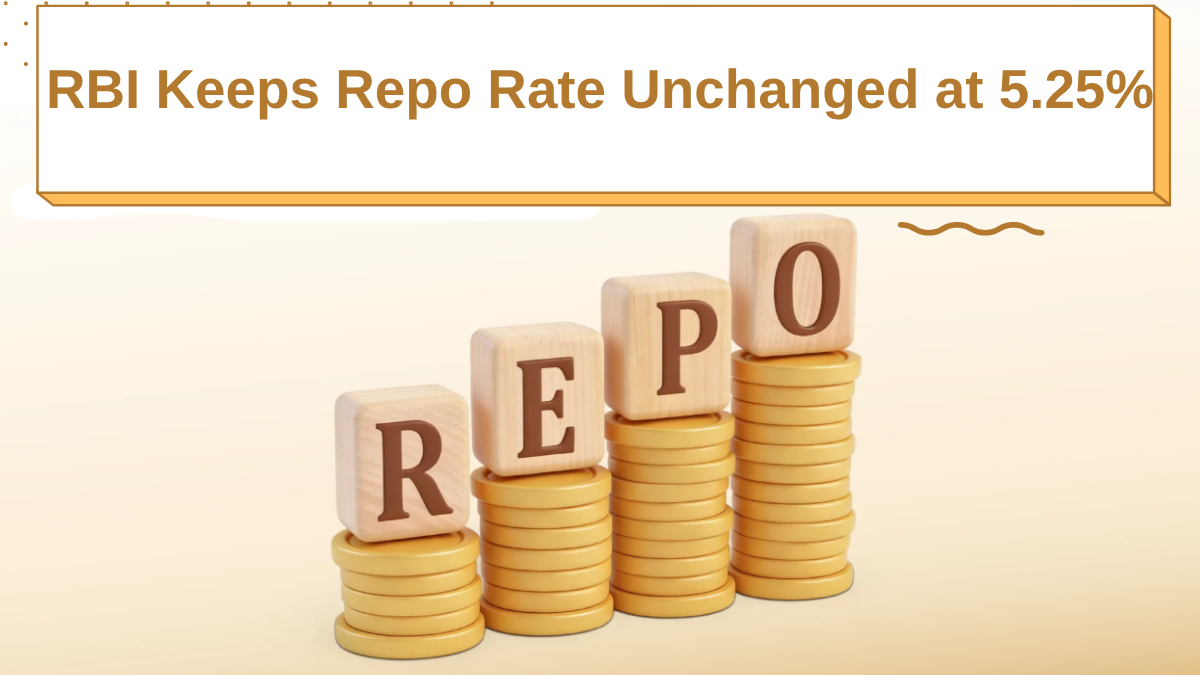
The Reserve Bank of India (RBI) has announced that the repo rate will remain unchanged at 5.25% after the latest Monetary Policy Committee (MPC) meeting. This decision aims to maintain economic stability while keeping inflation under control.
If you have a home loan, fixed deposit (FD), personal loan, or invest through SIPs, this announcement is important because it can influence borrowing costs and investment returns.
What is the Repo Rate?
The repo rate is the interest rate at which the RBI lends money to commercial banks.
When the repo rate:
- Increases: Loans generally become more expensive.
- Decreases: Loans usually become cheaper.
- Remains unchanged: Lending and deposit rates often stay stable unless banks decide otherwise.
Currently, the repo rate stands at 5.25%.
Impact on Home Loan Borrowers
Since the repo rate has not changed:
- Most floating-rate home loan EMIs are expected to remain unchanged.
- Banks are less likely to revise lending rates immediately.
- Existing borrowers can expect payment stability unless their lender changes rates independently.
Impact on Fixed Deposit Investors
FD investors should not expect significant changes in deposit interest rates immediately.
Many banks may continue offering attractive FD rates, but future changes will depend on liquidity, competition, and economic conditions rather than this RBI decision alone.
Impact on SIP and Mutual Fund Investors
For long-term SIP investors, an unchanged repo rate is generally considered a neutral development.
Rather than reacting to every RBI announcement, long-term investors may benefit more from staying invested consistently and following their financial goals.
Why Did RBI Keep the Repo Rate Unchanged?
The RBI balances several objectives:
- Controlling inflation.
- Supporting economic growth.
- Maintaining financial stability.
- Keeping borrowing costs predictable.
Holding the repo rate steady reflects a cautious approach while monitoring inflation and global economic developments.
What Should You Do?
If you have a home loan
Continue paying your EMI as usual and monitor communications from your bank regarding any future rate revisions.
If you are planning an FD
Compare interest rates across banks before investing, as individual banks may still adjust deposit rates.
If you invest through SIPs
Avoid making investment decisions based solely on one RBI policy announcement. A disciplined, long-term approach is generally more appropriate for SIP investing.
Final Thoughts
The RBI’s decision to keep the repo rate at 5.25% provides stability for borrowers and investors. While immediate changes to loan EMIs or FD rates are unlikely, it’s still worth monitoring future RBI policy meetings, as they can influence interest rates and overall financial planning.